Starry Night Wonders: How a Simple Backyard Scene Becomes a Puzzle for the Mind
Introduction: A Cozy Evening with a Twist
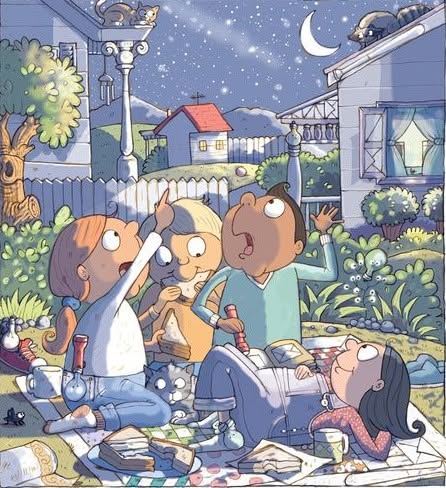
There’s nothing quite like gathering under a blanket of stars with friends—snacks at your side, a telescope trained on distant constellations, and the gentle hum of nighttime critters. Yet, as you settle in, something feels… off. Is that a cat on the roof batting at the moon? Why is that drink streaming uphill? Welcome to the delightful realm of “spot-the-mistake” puzzles, where a tranquil backyard sky morphs into a playground for your brain’s detective squad.
The Hidden Power of Spot‑the‑Mistake Puzzles
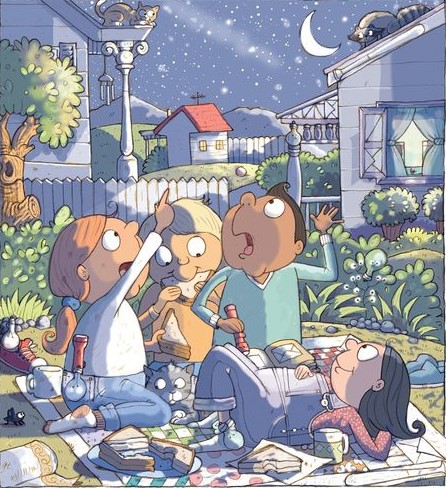
You might think these visual brainteasers are just kid stuff, but they’re secretly loaded with cognitive goodness. While you giggle at a sock dangling from a tree limb or a moon sporting a curly tail, your mind is hard at work—calibrating attention, flexing memory, and sharpening logical reasoning. It’s like doing mental yoga without breaking a sweat: every odd detail you spot is a mini workout for your gray matter.
Why This Scene Captures and Holds Your Attention
What makes a spilled drink flowing uphill so captivating? It’s the tug-of-war between expectation and observation. Your brain expects gravity to pull that liquid down, but the image defies it—and in that surprise, your focus ignites. Each twinkling star, every floating book, whispers, “Look closer.” Before you know it, your mind is locked in, scanning every pixel, every shadow, every curve of the scene.
How These Puzzles Boost Your Brainpower
- Enhances Observation Skills: You train your eyes to notice the tiniest irregularities—like paw‑print stars hiding among the usual sparkle. That translates to real life when you catch typos in an email or spot a misplaced item in your home.
- Strengthens Working Memory: Remembering how a normal backyard looks helps you flag anomalies. That mental juggling act—holding expected vs. actual details—keeps your working memory in top shape.
- Fosters Critical Thinking: You ask yourself, “Why is that house window reflecting daylight at night?” That moment of curiosity pushes your logic circuits into high gear, improving problem‑solving skills beyond puzzle time.
A Kid‑Friendly Scene with Serious Learning Value
Kids adore these playful hunts for hidden oddities. Beneath the laughter, though, powerful learning unfolds:
- Builds Focus and Patience: Hunting down every quirk—like a fish leaping from the bush—teaches sustained attention.
- Develops Visual Literacy: They learn to “read” images carefully, drawing context the way they glean meaning from words on a page.
- Expands Vocabulary: Asking, “Why is the moon sporting whiskers?” sparks rich discussions and new descriptive words.
- Encourages Teamwork: Solving together means sharing clues, celebrating finds, and strengthening social skills.
Why Adults Should Join the Starry Hunt Too
Think you’re too old for these visual brainteasers? Think again. Adults reap huge rewards:
- Stress Relief: Diving into a lighthearted puzzle lets you unplug from email overload and Netflix marathons.
- Sharper Decision‑Making: Training your eye on tiny mismatches helps you catch errors in work spreadsheets or home improvement plans.
- Mindfulness Boost: Concentrating fully on the image is a form of active meditation, boosting calm and clarity.
Delightful Oddities to Spot in the Backyard Sky
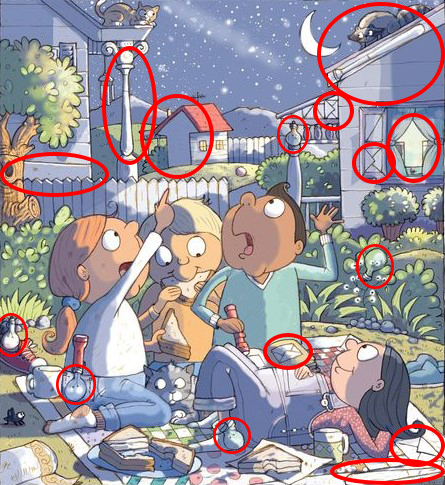
Ready to test your spotting skills? Keep an eye out for these playful anomalies:
- A solitary sock hanging from a tree limb, swaying in the breeze.
- A spilled beverage that defies gravity, creeping uphill toward the stars.
- A mischievous cat perched on the roof, pawing at a crescent moon.
- A telescope lens reflecting a daytime sky instead of the nighttime canopy.
- Stars twinkling not above but scattered across a nearby bush.
- A floating book, pages fluttering as if caught in a gentle updraft.
Each oddball moment is a little thrill—proof that your brain is primed to notice what doesn’t belong.
Pro Tips for Mastering Visual Puzzles
Want to level up your odd‑spotting prowess? Try these strategies:
- Divide and Conquer: Mentally section the image into quadrants—top-left, top-right, bottom-left, bottom-right—and tackle one slice at a time.
- Question the Context: Ask, “What era or setting is this?” Anything that clashes is a prime suspect.
- Scout for Symmetry Breakers: Patterns are your friends. When something disrupts a known pattern—like a flowerbed growing on a lamp post—you’ve found a clue.
- Take Brain Breaks: If you feel stumped, step away for a minute. Fresh eyes often spot what tired ones miss.
Turn It into an Interactive Family Game
Make your starlit puzzle a communal event:
- Timed Challenges: Set a stopwatch—who can spot the most oddities in two minutes?
- Storytelling Spins: After spotting an item, invent a backstory: “That book floated up because it’s actually a magic grimoire!”
- Customize and Swap: Print the scene, doodle your own absurd additions, then swap with a friend to see who creates the trickiest puzzle.
Conclusion: Let Curiosity Be Your Guide
That tranquil backyard stargazing moment—complete with a moon‑tail, uphill lemonade, and a rooftop kitty—transforms into a vibrant exercise for your mind. Spot‑the‑mistake puzzles aren’t just whimsical distractions; they’re secret training grounds for attention, memory, and critical thinking. Whether you’re a curious kid or an overstressed adult, this simple illustration invites you to slow down, observe deeply, and delight in the unexpected. Next time you gaze at a seemingly peaceful image, embrace your inner detective and let your brain star in its own cosmic adventure.