
Nature’s Number Game: Why This Whimsical Forest Puzzle Is a Delight for the Brain
Introduction: Where Peaceful Forest Meets Playful Challenge
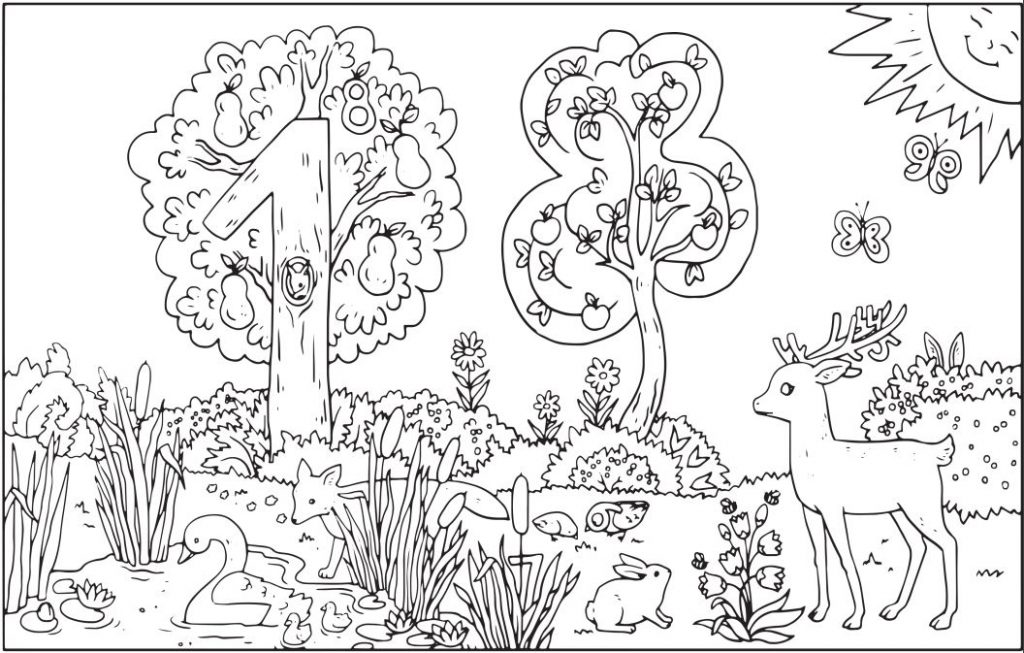
Imagine stepping into a sun-dappled woodland where birds trill overhead, a deer grazes at the edge of a crystal pond, and butterflies dance among fruit-laden branches. It all feels serene—until you realize the trees themselves form the numerals 1 and 8, subtly carved by nature’s own hand. Suddenly, that tranquil scene transforms into a playful riddle, coaxing you to look closer and savor every hidden twist. Welcome to the realm of nature-themed hidden object puzzles, where math, wildlife, and sharp observation come together to delight your senses and flex your mental muscles.
The Hidden Genius Behind Forest Number Puzzles
At their core, these illustrations blend the familiar with the unexpected. The forest’s beauty lures you in—majestic oaks, flitting dragonflies, and a family of ducks paddling through lily pads. But tucked within that beauty are surprises: a fox’s silhouette blending with foliage, a sun sporting a cheeky grin, or fruits that mirror perfectly upside-down shapes. By weaving numbers and oddities into a natural scene, the artist creates a low-stakes challenge that instantly engages your curiosity. You start by spotting one numeral-shaped trunk, and before you know it, you’re hunting every corner for the next delightful secret. That gentle cognitive nudge—“What else is hiding here?”—is the puzzle’s hidden genius.
How This Puzzle Boosts Cognitive Skills
Hidden object puzzles aren’t just a fun diversion—they’re mini brain gyms that train essential mental faculties:
- Pattern Recognition & Logical Thinking: When your brain registers a “1” in tree bark, it shifts into pattern-seeking mode. That same skill helps you spot grammatical errors in writing, inconsistencies in data, or odd behaviors in daily routines.
- Visual Memory & Recall: You scan groupings of leaves, memorize the deer’s posture, then revisit those mental snapshots to confirm if something’s amiss. This back-and-forth builds short-term memory and strengthens your ability to recall visual details.
- Attention & Mindfulness: To catch a heart-shaped butterfly or a bunny hiding in the underbrush, you must slow down and truly observe. That focused attention mirrors meditation techniques, quieting mental chatter and boosting present-moment awareness.
- Creative Engagement: Each oddity—whether it’s a frog disguised as a rock or a fish peeking through ripples—encourages narrative thinking. You imagine stories: Why is that squirrel perched on a number-shaped branch? What secret does the smiling sun hold? This imaginative leap fuels creative problem-solving in other areas of life.
A Closer Look at the Whimsical Oddities
Let’s spotlight some of the forest’s clever surprises:
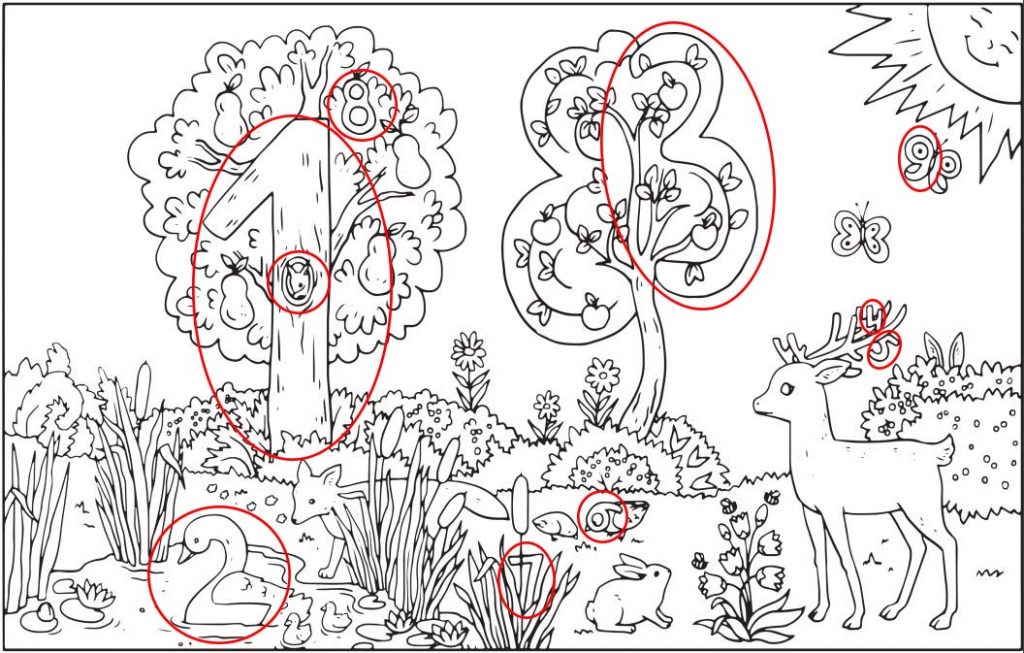
- Number-Shaped Trees: The star of the show is a trunk twisted into a perfect “1,” while a cluster of branches forms an elegant “8.”
- Upside-Down Fruit: On one tree, two apples hang so symmetrically that you realize one is actually inverted—a playful trick.
- Grinning Sun: A cheerful face adorns the morning sun, giving the landscape a mischievous personality.
- Heartwing Butterflies: A pair of butterflies flutter together, their wings forming a clear heart shape.
- Foxy Camouflage: A red fox peeks out from behind reeds so seamlessly you almost miss it.
- Disguised Duckling: One fluffy duckling blends so perfectly with pale flowers that you double back to confirm its presence.
- Hidden Owl: Within the hollow of the “1” tree, an owl’s round eyes blink at unsuspecting searchers.
- Cartoonish Fish: In the pond’s reflection, fish sport tiny smiles, adding a dash of humor.
Each discovery brings a mini “aha!” moment—a quick burst of reward that keeps the puzzle addictively engaging.
Why Kids (and Adults) Love These Brain-Teasers
Children naturally approach the world with fresh eyes, so uncovering a flower that’s also a clock face or counting owls nestled in branches feels like pure magic. But beyond giggles, they gain vital skills:
- Early Math Foundations: Spotting and naming number shapes reinforces numerical literacy without worksheets or flashcards.
- Language & Storytelling: Describing a squirrel disguised as a mushroom expands vocabulary and narrative skills.
- Concentration & Perseverance: Finding every hidden object takes patience, teaching kids the value of sustained focus.
Adults, too, reap rewards. A brief puzzle break can:
- Reset Mental Fatigue: Shifting from work tasks to playful observation refreshes focus and reduces stress.
- Stimulate Creativity: Imagining why a fox strolls through numeral-shaped trees sparks lateral thinking—a boon for brainstorming.
- Maintain Cognitive Agility: Regularly challenging your brain with visual puzzles supports long-term mental sharpness and wards off cognitive decline.
Pro Tips for Mastering Hidden Object Puzzles
Ready to up your game? Try these strategies:
- Scan Systematically: Divide the image into quadrants—upper-left, upper-right, lower-left, lower-right—and inspect each section thoroughly.
- Spot Symmetry Breaks: Nature tends toward balance. When you notice asymmetry—like five petals instead of six—that’s your cue.
- Alternate Focus Levels: Switch between viewing the entire scene and zooming in on small details. This keeps your brain agile and reduces the chance of overlooking tiny elements.
- Use a Checklist Approach: Mentally or physically jot down categories—animals, shapes, facial expressions—and tick them off as you identify each one.
- Take Short Breaks: If your eyes glaze over, step away for a minute. Fresh perspective often reveals the most elusive surprises.
DIY: Create Your Own Nature Number Puzzle
Feeling inspired? Craft your own woodland riddle in four simple steps:
- Sketch a Base Scene: Draw a basic forest layout—trees, grass, water, and wildlife.
- Incorporate Numerals: Carve numbers into trunks or shape branches into digits that blend with the landscape.
- Hide Whimsical Elements: Add playful details—mushrooms wearing hats, fish jumping onto lily pads, or birds carrying tiny letters.
- Challenge Friends or Family: Share your drawing and see who uncovers the most oddities. Turn it into a timed competition to stoke excitement.
This creative exercise boosts both your artistic side and your puzzle-making prowess. Plus, it’s a fun bonding activity for classrooms, game nights, or rainy afternoon retreats.
Conclusion: Embrace the Forest of Numbers
What begins as a calm stroll through a forest soon unfolds into an enchanting hunt for hidden numbers, clever critters, and playful faces. Nature’s Number Game offers more than cute visuals—it delivers a powerful workout for pattern recognition, memory, focus, and creativity. Whether you’re guiding a child’s first math adventure or carving out a mindful break in your busy day, these puzzles remind us that learning thrives when curiosity leads the way. So the next time you seek a mental refresh, lean into the forest’s secrets—let those trees, animals, and smiling suns guide you into a world where observation meets imagination, and every discovery feels like pure magic.