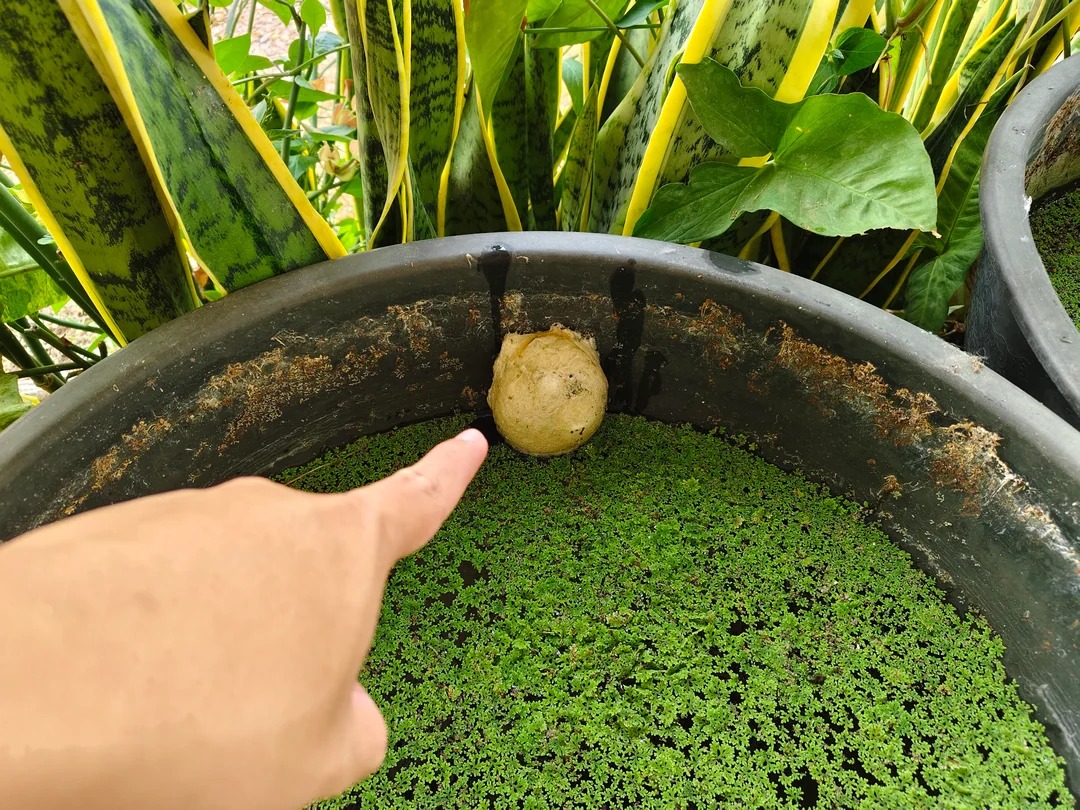
I noticed something strange inside one of my plant pots a few days ago, and at first I honestly had no idea what I was looking at.
The object was stuck directly to the inside wall of a plastic pot. It looked round, pale, and slightly textured — almost like a mushroom or some kind of strange growth. The oddest part was that it definitely hadn’t been there just three or four days earlier.
At first, I assumed it might be fungus.
But the more I looked at it, the less that explanation made sense. It wasn’t growing from the soil. It wasn’t attached to a root or plant stem. Instead, it was firmly connected to the plastic itself, almost as if it had been glued there.
I touched it carefully.
It felt solid but slightly organic, with a dry, natural texture. Because of the intense heat in Thailand — where temperatures were reaching around 42°C — it seemed unlikely that it had appeared naturally overnight.
That made the mystery even stranger.
I started wondering whether it came from an insect, some kind of egg sac, or even a strange reaction caused by moisture and heat inside the pot. The shape looked too intentional to be random.
After searching for similar cases and comparing images online, the answer finally became much clearer.
👉 It’s most likely a mud nest built by a solitary wasp, sometimes called a potter wasp or mud dauber.
These insects create small nests using mud or clay, attaching them to protected surfaces like walls, ceilings, pots, and garden containers. The nest serves as a safe chamber where the wasp lays eggs and stores food for the developing larvae.
Because they are built from natural material, these nests can easily be mistaken for mushrooms, dried foam, or strange plant growths.
In warm climates, especially in places with high humidity and heat, a nest like this can appear surprisingly quickly — sometimes within just a few days.
At first glance, it looked like something growing from the plastic. But in reality, it was simply a tiny piece of insect engineering hiding in plain sight.