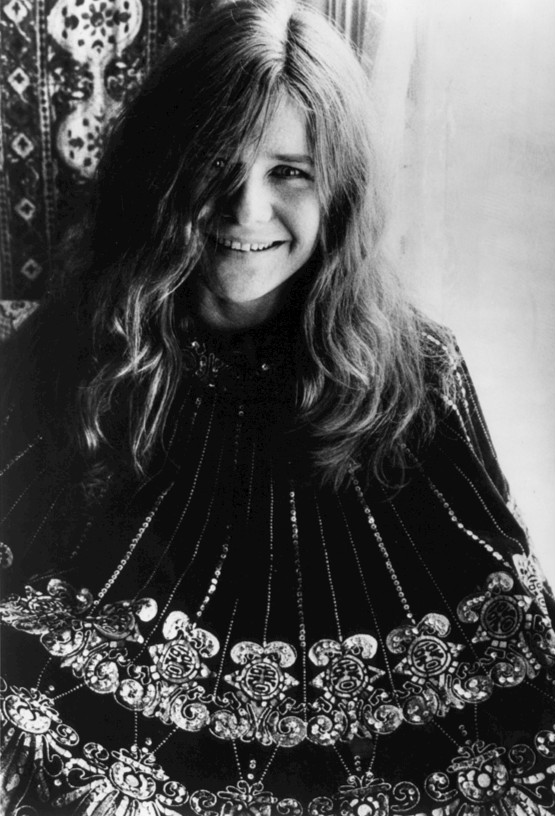
Before Janis Joplin became one of the most unforgettable voices of the 1960s, she was a misunderstood girl growing up in Port Arthur, Texas, a small town where being different could make life painfully difficult. To many people around her, she did not fit the expected mold. But beneath the teasing, rejection, and loneliness was a rare force: a girl with a voice, a mind, and a spirit that could not be contained.

Source: Wikimedia Commons

Born on January 19, 1943, in Port Arthur, Texas, Joplin was raised in a hardworking family. Her mother, Dorothy, worked at a local business college, and her father, Seth Joplin, was an engineer. The family lived a quiet, traditional life, but from an early age Janis showed signs that she was not meant to simply blend in. She was curious, outspoken, artistic, and drawn to people and ideas far outside the conservative world around her.

Source: Wikimedia Commons

Growing up in the segregated South during the tense years surrounding school integration, Joplin became interested in music that carried pain, freedom, and truth. She was drawn to blues, jazz, and folk, especially artists such as Bessie Smith, Ma Rainey, Lead Belly, and Big Mama Thornton. Their voices gave her a language for emotions she could not easily explain.
In high school, however, life was often cruel. Joplin was mocked for her appearance, her acne, her weight, her clothes, her beliefs, and her refusal to act like everyone else. She was not only teased for how she looked; she was rejected for how boldly she thought. Friends and family later remembered that the pain of being treated as an outsider stayed with her for years.
After high school, she attended college in Texas, including time at the University of Texas at Austin. Even there, she remained different. She was known for going barefoot, wearing jeans to class, carrying an autoharp, and caring more about music and ideas than social approval. One cruel campus incident, in which she was mockingly nominated in a humiliating contest, left a deep emotional wound.
Still, the same qualities that made her an outsider in Texas helped shape her as an artist. She did not sing politely. She did not perform carefully. She sang as if every note had been pulled directly from her own life.
In 1963, Joplin left Texas and went to San Francisco, chasing a musical future that still seemed uncertain. She sang in coffeehouses, moved through the folk and blues scene, and struggled with the pressures and instability that surrounded her. Success did not come immediately, but her voice was too powerful to stay hidden for long.
By 1966, she had joined Big Brother and the Holding Company, a San Francisco rock band that gave her the stage she needed. With them, Joplin began transforming from an unknown singer into a commanding live performer.

Source: Wikimedia Commons

Then came the moment that changed everything: the Monterey Pop Festival in June 1967. Joplin’s performance stunned the crowd and caught the attention of the music industry. Almost overnight, the woman once dismissed for being too different became a symbol of emotional power, rebellion, and raw authenticity.

Source: Wikimedia Commons

Her rise continued through the late 1960s. With Big Brother and the Holding Company, she helped make Cheap Thrills one of the defining rock albums of its era. Songs like “Piece of My Heart” showed the full force of her voice: wounded, fierce, soulful, and impossible to ignore.

Source: Wikimedia Commons

By 1969, Joplin was no longer just a rising performer. She had become one of rock music’s first true female superstars, appearing on television, headlining major shows, and proving that a woman in rock could be just as intense, free, and commanding as any man onstage.

Source: Wikimedia Commons

Behind the fame, however, Joplin still carried emotional scars. The rejection she had faced in Texas never fully disappeared. Despite her success, she continued searching for acceptance, especially from her family back home. Her letters showed a daughter still trying to explain her choices and prove that the life she had chosen mattered.

Source: Wikimedia Commons

Joplin died in October 1970 at only 27 years old, a loss that shocked the music world. Her career had been short, but its impact was enormous. After her death, “Me and Bobby McGee” became one of her most famous recordings and helped secure her place in music history.

Source: Wikimedia Commons

In the decades after her passing, Joplin’s legacy only grew. She was inducted into the Rock and Roll Hall of Fame in 1995, received a GRAMMY Lifetime Achievement Award in 2005, and was honored with a star on the Hollywood Walk of Fame in 2013. Because she died in 1970, there are no recent personal photos of Janis herself, but later images of her homes, memorabilia, and memorials show how strongly her presence still remains.

Source: Wikimedia Commons

Decades later, Janis Joplin remains more than a tragic rock legend. She is a reminder that true beauty is not perfection. It is power, honesty, courage, and soul. The girl once mocked for not fitting in became the woman whose voice helped define a generation.
And no one sang that truth louder than Janis Joplin.