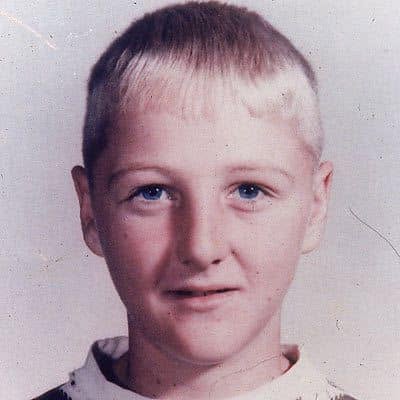
Larry Bird’s career is one of the defining stories in American basketball. Born on December 7, 1956, in West Baden Springs, Indiana, and raised in nearby French Lick, Bird developed from a small-town high school player into an Indiana State phenomenon, a Boston Celtics icon, an Olympic champion, an award-winning coach and one of the NBA’s most accomplished executives.
Known by nicknames including “Larry Legend” and “The Hick from French Lick,” Bird played all 13 seasons of his NBA career for the Celtics, from 1979 until 1992. He won three championships, three consecutive Most Valuable Player awards and two NBA Finals MVP awards. He was also selected as one of the NBA’s 50 Greatest Players in 1996 and later joined the league’s 75th Anniversary Team. (The Naismith Basketball Hall of Fame)
Growing up in southern Indiana
Bird came from a working-class family and grew up with five siblings in French Lick, a small resort town in southern Indiana. Long before professional fame, the local basketball court became the setting in which he developed the repetition, patience and competitiveness that later defined his playing style.
At Springs Valley High School, Bird grew rapidly and emerged as the school’s basketball star. The future Hall of Famer did not initially resemble the polished NBA forward audiences would later recognize. He developed gradually, relying on practice, positioning and an intense desire to improve rather than spectacular athleticism alone.
The Basketball Hall of Fame credits Bird with leading Springs Valley to a state sectional championship before continuing his career at Indiana State. His connection to French Lick remained so central to his public identity that his hometown became permanently associated with his famous nickname. (The Naismith Basketball Hall of Fame)
Becoming a star at Indiana State
Bird’s college career transformed both Indiana State University and national basketball. He led the Sycamores to the 1979 NCAA championship game after an undefeated regular season, setting up a nationally anticipated meeting with Magic Johnson and Michigan State.
Michigan State won the championship, but the game introduced the Bird–Johnson rivalry to a mass audience. The two stars entered the NBA later that year and became the central figures in a Celtics–Lakers competition that helped increase the league’s popularity throughout the 1980s. (NBA.com)
Archival image: Larry Bird playing for Indiana State, approximately 1976–77

Source: Wikimedia Commons — 1977 Indiana State University yearbook

This public-domain yearbook photograph captures Bird before NBA fame. It shows the recognizable shooting motion, concentration and high release point that would become central features of his professional game. The image comes from Indiana State’s 1977 Sycamore yearbook. (Wikimedia Commons)

The unusual path to Boston
The Boston Celtics selected Bird with the sixth pick of the 1978 NBA draft even though he intended to play another college season. He joined Boston in 1979 after completing his Indiana State career.
The decision proved transformative. Bird immediately helped restore a franchise that had declined after its earlier championship era. His passing, rebounding, shooting and ability to anticipate plays made him much more than a conventional scorer. He won the 1980 NBA Rookie of the Year award and became the centerpiece of a rebuilt Celtics roster. (NBA.com)
Bird was officially listed at 6 feet 9 inches and finished his NBA career with averages of 24.3 points, 10 rebounds and 6.3 assists per game. Those numbers reflect his unusual completeness: he could score from the post or perimeter, control the defensive boards and operate as one of basketball’s most creative passers. (NBA.com)
The Celtics’ return to championship glory
Bird helped Boston win NBA championships in 1981, 1984 and 1986. He reached five NBA Finals during the decade and played alongside a celebrated group that included Kevin McHale, Robert Parish and Dennis Johnson.
His 1984 and 1986 championships brought him Finals MVP honors. The 1985–86 Celtics are still widely regarded as one of basketball’s greatest teams, combining individual talent with disciplined passing, defensive toughness and an extraordinary home record. (NBA.com)
Archival image: Larry Bird at the free-throw line during the 1985 NBA Playoffs

Source: Wikimedia Commons — photograph by Steve Lipofsky/Basketballphoto.com
_(cropped).jpg)
The photograph was taken during Game 2 of Boston’s 1985 playoff series against the Detroit Pistons. It presents Bird during the period in which he was winning three consecutive league MVP awards. (Wikimedia Commons)

Three consecutive MVP awards
Bird was named NBA Most Valuable Player in 1984, 1985 and 1986. He became the first non-center to win the award in three consecutive seasons and only the third player at that time to accomplish the feat.
His peak combined statistical production with team dominance. Bird could dictate a game without monopolizing the ball, using quick passes, off-ball movement and calculated positioning. He was a 12-time All-Star, earned nine All-NBA First Team selections and led the league in free-throw percentage four times. (NBA.com)
Bird was also a three-time winner of the NBA’s original three-point shooting contest. His performances became famous not only because he won, but because of the confidence with which he approached the competition. Long before high-volume three-point shooting became the foundation of modern NBA offense, Bird demonstrated how a forward with range could transform defensive spacing.
The rivalry with Magic Johnson
No discussion of Bird’s career is complete without Magic Johnson. Their rivalry began in the 1979 NCAA championship game and continued through repeated Celtics–Lakers battles in the NBA.
Their personalities appeared to be opposites. Johnson played with visible enthusiasm and Hollywood charisma, while Bird projected a quieter, more severe competitive image. Yet both were exceptional passers who valued team play, understood the court several moves in advance and elevated the performances of those around them.
Boston and Los Angeles met in the NBA Finals in 1984, 1985 and 1987. The Celtics won the first of those matchups, while the Lakers won the next two. Their rivalry became one of the defining forces behind the NBA’s commercial and cultural growth in the 1980s. (NBA.com)
Confidence, trash talk and basketball intelligence
Bird’s reputation was built as much on his mentality as on his statistics. He was famous for telling defenders what he intended to do before executing the play successfully. His verbal confidence was supported by preparation and an exceptional understanding of angles, timing and defensive reactions.
He was not the fastest or highest-jumping superstar of his generation. Instead, he used anticipation to reach open spaces before opponents recognized that those spaces existed. His passes often appeared simple only after he made them, and his rebounding depended heavily on reading the flight of the ball.
NBA historical profiles emphasize his ability to thrive under pressure and produce memorable late-game plays. Bird’s combination of fundamentals, improvisation and competitiveness made him one of the league’s most feared clutch performers. (NBA.com)
Archival action image: Larry Bird driving for a layup

Source: Wikimedia Commons — photograph by Steven Carter

The photograph shows Bird attacking the basket in a Celtics uniform, illustrating the balance and touch that complemented his better-known jump shooting and passing. The image was originally published on Flickr under a Creative Commons license. (Wikimedia Commons)

A championship celebration in Boston
Bird’s connection to Boston extended beyond the court. He became a symbol of the city’s basketball revival, filling Boston Garden and restoring championship expectations to one of professional sports’ most successful franchises.
Archival image: Larry Bird at a Boston Celtics victory celebration, approximately 1984

Source: Wikimedia Commons — City of Boston Archives
.jpg)
The City of Boston Archives identifies the scene as a Celtics victory celebration attended by Mayor Raymond Flynn and Bird. The photograph captures the broader civic excitement surrounding the team during its 1980s championship era. (Wikimedia Commons)

Injuries and the final playing years
Bird’s later career was increasingly affected by injuries, particularly chronic back problems. Even when his mobility declined, he remained dangerous because his game was grounded in shooting, positioning and decision-making.
His final major achievement as a player came with the United States team at the 1992 Barcelona Olympics. Bird and Johnson served as co-captains of the original Dream Team, which also included Michael Jordan, Charles Barkley, Patrick Ewing, Karl Malone, Scottie Pippen, David Robinson and other NBA stars.
The team won the gold medal and played an important role in expanding basketball’s worldwide popularity. Bird announced his retirement on August 18, 1992, ending his NBA career with 21,791 points, 8,974 rebounds and 5,695 assists. (NBA.com)
His No. 33 was subsequently raised to the Boston Garden rafters, permanently removing it from use by future Celtics players. (The Naismith Basketball Hall of Fame)
From superstar to Indiana Pacers coach
Bird returned to his home state when he became head coach of the Indiana Pacers in 1997. Despite having no previous head-coaching experience, he immediately produced results.
He was voted NBA Coach of the Year for the 1997–98 season. Under Bird, Indiana reached the Eastern Conference finals in each of his three seasons and advanced to the 2000 NBA Finals, where the Pacers lost to the Los Angeles Lakers. (NBA.com)
Bird stepped down after three seasons, following the timetable he had established when accepting the job. His brief coaching career reinforced his reputation as a leader who understood roles, preparation and how to build confidence within a team.
Executive success with the Pacers
Bird later returned to the Pacers as president of basketball operations. In that role, he helped construct competitive teams through drafting, trades and free-agent decisions.
He was named NBA Executive of the Year for the 2011–12 season after assembling a roster that included Paul George, Roy Hibbert, David West and other important contributors. He became the first—and remains the only—person in NBA history to win regular-season MVP, Coach of the Year and Executive of the Year. (NBA.com: NBA Communications)
Image: Larry Bird speaking as an Indiana Pacers executive in 2017

Source: AP News — photograph by Darron Cummings
The photograph was taken when Bird announced in May 2017 that he was stepping down as Indiana’s president of basketball operations. AP later reported that he returned to the Pacers as a consultant in 2023. (AP News)
Recognition among basketball’s greatest players
Bird entered the Naismith Memorial Basketball Hall of Fame as an individual player in 1998. He was inducted again in 2010 as a member of the 1992 United States Olympic team.
In 1996, the NBA selected him for its 50th Anniversary All-Time Team. In 2021, he was also named to the NBA’s 75th Anniversary Team, which retained every member of the earlier group of 50 legends. (The Naismith Basketball Hall of Fame)
These honors recognize more than Bird’s championship total. They reflect his influence on the role of the modern forward, the growth of the NBA and the idea that elite playmaking could come from virtually any position.
The Larry Bird Museum
On May 30, 2024, Bird appeared in Terre Haute, Indiana, for the opening of the Larry Bird Museum inside the Terre Haute Convention Center.
The museum follows his journey through Springs Valley High School, Indiana State, the Boston Celtics and the Pacers. Its collection includes uniforms, awards, photographs, interactive exhibits and interviews with coaches, teammates and rivals. Bird also requested that admission remain free. (AP News)
Among the newest clearly dated and widely accessible public photographs found for this article are the images taken at that opening ceremony.
Recent image: Larry Bird speaking at the museum opening, May 30, 2024

Source: AP News — photograph by Joseph C. Garza/The Tribune-Star
The image shows Bird answering questions after the grand-opening ceremony. He discussed memories of his early coaches, his college years and the long relationship between his career and the people of Terre Haute.
Recent image: Larry Bird greeting the crowd at the museum ceremony

Source: AP News — photograph by Joseph C. Garza/The Tribune-Star
Bird, who has often described himself as shy and uncomfortable with public attention, gave the audience a thumbs-up as he walked onto the stage.
Recent image: Interior of the Larry Bird Museum in 2024

Source: AP News — photograph by Joseph C. Garza/The Tribune-Star
The entrance combines memorabilia from different periods of Bird’s life with displays recalling the “Larry Legend” and “Hick from French Lick” identities that followed him throughout his career.
A legacy that extends beyond statistics
Larry Bird’s legacy cannot be measured only through 21,791 points, three championships or three MVP awards. His larger contribution lies in how he played and what his career represented.
He showed that anticipation could overcome speed, that passing could be as intimidating as scoring and that confidence was most powerful when supported by relentless preparation. He also demonstrated unusual versatility after retirement, succeeding as both a coach and an executive.
Bird’s story connects several important periods of basketball history: the rise of nationally televised college basketball, the Celtics–Lakers revival, the global influence of the Dream Team and the growth of modern NBA team management.
From the courts of French Lick to Indiana State, Boston Garden, the Olympic podium and the Indiana Pacers’ front office, Bird repeatedly transformed the teams and institutions around him. That complete body of work—not one famous shot or individual season—is why he remains one of the most consequential figures basketball has produced.