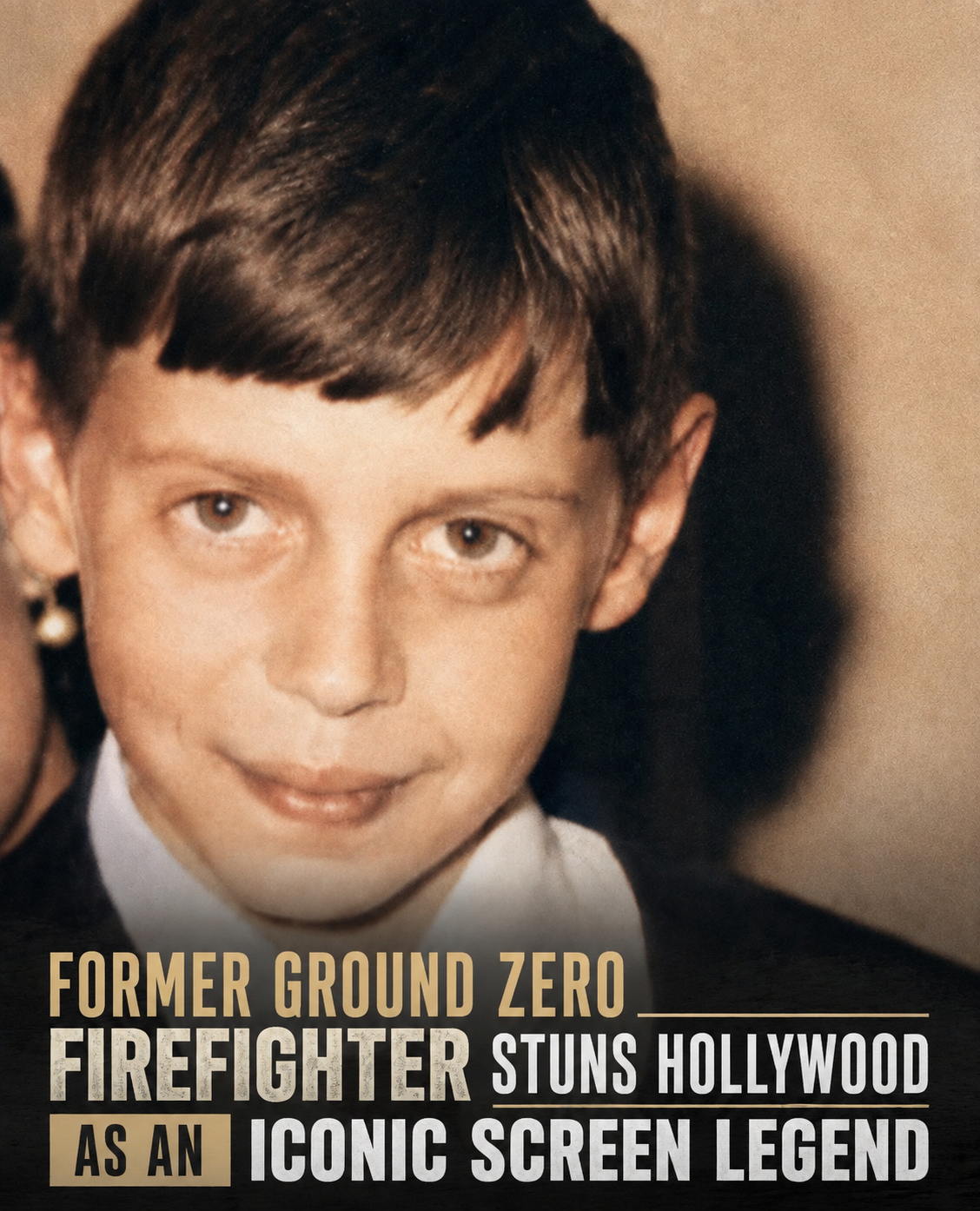
Few actors possess a visage that can instantly dictate the entire mood of a scene. With his distinctively expressive eyes, angular profile, and a voice capable of pivoting from dangerously quiet to frantically nervous, Steve Buscemi forged one of Hollywood’s most fascinating careers by completely shattering the mold of the traditional leading man. He became the undisputed king of the margins, breathing life into characters hovering on the edges of society. The very same unconventional physical traits that would later inspire thousands of affectionate internet memes became his greatest professional weapon, rendering him instantly recognizable across gritty independent films, massive studio blockbusters, family animation, and prestige television.
Long before he was an indie-film icon, his story began in Brooklyn, with much of his youth spent in Valley Stream on Long Island. Though the acting bug bit him early, his post-high school trajectory was anything but a straight line to the silver screen. He juggled acting classes with blue-collar jobs before taking the civil service exam and joining the New York City Fire Department. Throughout the early 1980s, Buscemi proudly served with Engine Company 55 in Manhattan’s Little Italy, actively fighting fires while tirelessly auditioning on the side. (Wikipedia)
That foundational chapter as a firefighter never truly left him; it is permanently woven into his character. In the horrific aftermath of the September 11 attacks, Buscemi quietly returned to his old firehouse, strapping on his gear to work grueling, anonymous shifts alongside his former brothers at Ground Zero. In the decades since, he has fiercely championed firehouse preservation campaigns and tirelessly advocated for the long-term healthcare needs of first responders. This profound bond with the FDNY is not some carefully orchestrated public relations narrative—it is a lifelong allegiance that predates his fame and endures long after he handed in his badge. (TIME)
**Breaking Into Independent Film**
Buscemi’s ascent as an actor was heavily nurtured within the fertile grounds of New York’s independent film and experimental theater scenes. A pivotal role in *Parting Glances* put him on the map, while unforgettable turns in Jim Jarmusch’s *Mystery Train* and the Coen brothers’ *Miller’s Crossing* proved he possessed the rare ability to steal a movie with only a handful of minutes on screen.
His explosive, undeniable breakthrough arrived via Quentin Tarantino’s *Reservoir Dogs*. Stepping into the cheap black suit of Mr. Pink, Buscemi delivered Tarantino’s rapid-fire, combative dialogue with a mesmerizing cocktail of high-strung anxiety, cold calculation, and pitch-black comedy. That single performance minted him as the defining character actor of the 1990s. He revolutionized the cinematic criminal—stripping away conventional tough-guy bravado to create a villain who was terrifying precisely because he was hyper-alert, paranoid, and desperately trying to survive.
Steve Buscemi during the 1990s:

![Source: [Wikimedia Commons]](https://commons.wikimedia.org/wiki/File:Steve_Buscemi_(1996).jpg)
Naturally, this kinetic energy made him a favorite muse of the Coen brothers. In *Fargo*, he perfectly embodied Carl Showalter, a motor-mouthed crook whose spectacularly botched kidnapping scheme spirals into bloody chaos. Conversely, in *The Big Lebowski*, he played Donny Kerabatsos, the remarkably sweet, constantly silenced third wheel of a bowling trio. Despite being polar opposites, both characters showcased his unparalleled knack for generating both unbearable tension and uproarious humor without having to dominate a scene. The Television Academy rightfully places *Fargo*, *The Big Lebowski*, *Reservoir Dogs*, *Miller’s Crossing*, and *Barton Fink* among the cinematic touchstones that cemented his legacy. (Television Academy)
Mainstream Hollywood inevitably came calling. He seamlessly transitioned into popcorn blockbusters like *Con Air*, *Armageddon*, and *The Island*, alongside frequent comedic collaborations with Adam Sandler. Meanwhile, a generation of younger fans came to know him purely through his voice work in animated hits like *Monsters, Inc.* and the *Hotel Transylvania* franchise. He became an actor who defied all categorization: an indie darling, a comedic sidekick, a disturbing villain, a dramatic anchor, a beloved voice actor, and eventually, a visionary filmmaker.
**Becoming a Writer and Director**
Stepping behind the camera proved that Buscemi’s creative genius extended far beyond performing. He wrote, directed, and starred in *Trees Lounge*, a brilliantly dark, melancholic comedy about an aimless, unemployed mechanic wasting his life away in a local watering hole. Heavily inspired by the working-class Long Island communities of his youth, the film established Buscemi as an empathetic director deeply fascinated by loneliness, fractured relationships, and the unglamorous lives of ordinary people. (Press WBD)
He continued to build an impressive directorial resume with deeply human projects like *Animal Factory*, *Lonesome Jim*, *Interview*, and *The Listener*. The latter, starring Tessa Thompson, follows a dedicated helpline volunteer navigating a profoundly difficult night of phone calls. The film perfectly encapsulates Buscemi’s enduring cinematic thesis: the agonizing struggle to connect in an isolating world, proving his directorial voice remains just as intimate and compassionate today as it was during *Trees Lounge*. (Thessaloniki International Film Festival)
Steve Buscemi discussing In the Soup at a film festival:

![Source: [Wikimedia Commons]](https://commons.wikimedia.org/wiki/File:Steve_Buscemi_(41465)_crop.jpg)
**From Character Actor to Television Leading Man**
If his film career established him as an elite supporting player, it was the role of Enoch “Nucky” Thompson in HBO’s *Boardwalk Empire* that radically redefined his trajectory. By casting him as the ruthless, politically savvy kingpin of a massive, big-budget period piece, the creators completely obliterated the industry’s preconceived notions of what a television leading man should look like.
As Nucky, Buscemi delivered a masterclass in duality, seamlessly blending intoxicating charm, deep-seated insecurity, calculated cruelty, and profound emotional isolation. This towering performance earned him a Golden Globe for Best Actor in a Television Drama, adding to an awards shelf that the Golden Globes’ official database notes includes one win and three nominations across *Boardwalk Empire* and *Ghost World*. (Golden Globes)
His television dominance also included legendary contributions to *The Sopranos*. Not only did he deliver a heartbreaking performance as Tony Blundetto, but he also stepped behind the camera to direct several episodes, including the universally revered masterpiece “Pine Barrens.” This fluid ability to navigate both the emotional demands of acting and the technical rigors of directing underscores his total mastery of the television medium.
Steve Buscemi during a celebration of The Sopranos:

![Source: [Wikimedia Commons]](https://commons.wikimedia.org/wiki/File:Steve_Buscemi_2024_Sopranos_anniversary_(cropped).png)
**A Familiar Face in a New Generation of Television**
Never one to rest on his laurels, Buscemi recently captured an entirely new demographic of fans through the highly anticipated second season of Netflix’s *Wednesday*. He was cast as Barry Dort, the newly appointed principal of Nevermore Academy—an initially enthusiastic administrator harboring a labyrinth of complicated, deeply hidden motives. Netflix teased Dort as a zealous champion of “outcast pride,” while iconic director Tim Burton openly raved about the wildly unpredictable energy Buscemi injected into the set. (Netflix)
The casting was a stroke of absolute brilliance. Buscemi’s naturally mercurial screen presence allowed Principal Dort to oscillate between being warmly humorous, highly suspicious, and deeply unsettling all in the same breath. Rather than resting on the tropes of his famous mobster roles, he weaponized the audience’s familiarity with him, keeping viewers constantly off-balance and guessing his true intentions.
Recent portrait of Steve Buscemi:

![Source: [Wikimedia Commons]](https://commons.wikimedia.org/wiki/File:SteveBuscemi-byPhilipRomano.jpg)
As of 2026, Buscemi has also taken on a vital real-world role as an ambassador for Project UnLonely Films, a philanthropic initiative leveraging short cinema to destigmatize conversations around isolation and the human need for connection. This advocacy dovetails perfectly with the thematic heart of his directorial career: shining a light on the overlooked, the isolated, and the quiet dignity found in the search for companionship. (PrWeb)
When the final credits eventually roll on Steve Buscemi’s expansive career, his legacy will not be reduced to viral internet jokes or his unconventional physical traits. His distinct look is merely the surface; his longevity was forged by a ferocious, undeniable talent. He transformed physical uniqueness into boundless emotional range, danced effortlessly between the indie world and studio juggernauts, claimed his throne as an award-winning television lead, and cultivated a deeply empathetic voice behind the camera. Decades after he first stepped onto a set, he remains one of the rarest breeds in Hollywood: an artist who can walk into a scene for just a few moments, and permanently alter the atmosphere of the entire story.