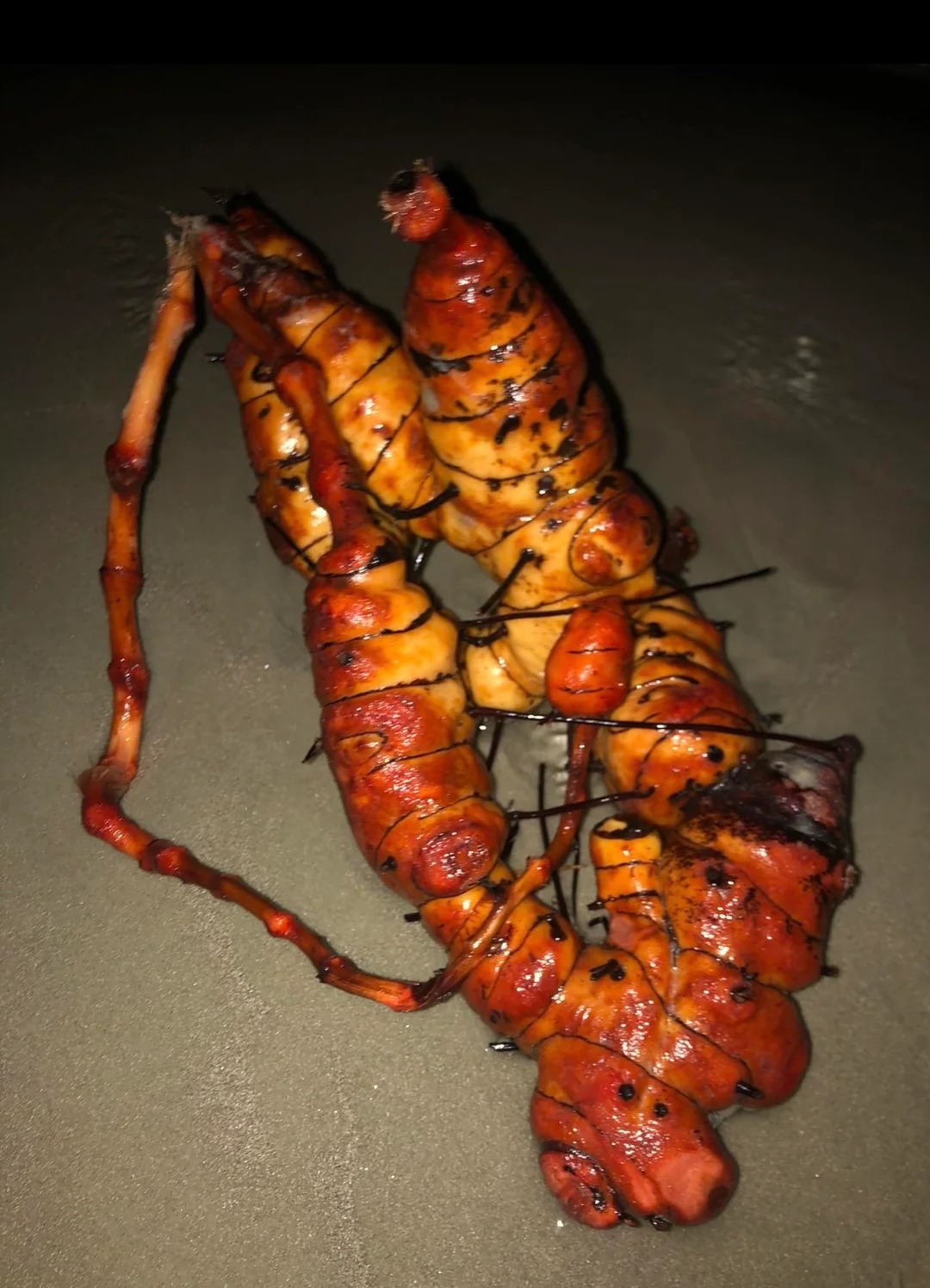
Years ago, while walking along a beach in Florida during vacation, something unusual appeared near the shoreline.
It was already dark outside, so visibility was poor. At first, it looked like a tangled mass of orange and red shapes washed up by the tide. The object didn’t move, but it definitely stood out against the sand.
Curiosity took over.
Using a stick, it was carefully nudged to get a better look. It felt fairly heavy and seemed to hold together as one piece rather than falling apart like seaweed or debris. The shape was strange — twisted, segmented, and almost organic-looking, like something that had once been alive.
But it wasn’t moving.
Because of the darkness, the only real chance to examine it later came through photos taken at the time. Looking back at the images only made the mystery more confusing. The object appeared to have thick, curled sections tied together by thin dark strands, with a texture that looked fleshy or rubbery.
For years, the question remained unanswered.
People guessed everything from a strange sea creature to fishing waste, coral, or even part of a plant root system. Nothing seemed to fully explain the unusual shape or why it looked so unnatural.
Eventually, after comparing similar beach discoveries and marine biology discussions, the mystery started to make sense.
👉 It was most likely the egg mass of a marine snail or sea slug, sometimes called a sea hare egg ribbon or a cluster of marine egg sacs.
These gelatinous egg masses are often laid in long tangled strands and can wash ashore after storms or strong tides. When exposed to sand, saltwater, and time, they can darken, shrink, twist together, and take on a strange segmented appearance.
Because they dry out and collect debris, they often look far stranger on the beach than they do underwater.
They are usually harmless, but their unusual appearance makes them easy to mistake for something much more mysterious.
What looked like a bizarre creature from the ocean turned out to be part of a completely natural marine life cycle — just one of those strange things the sea occasionally leaves behind.